

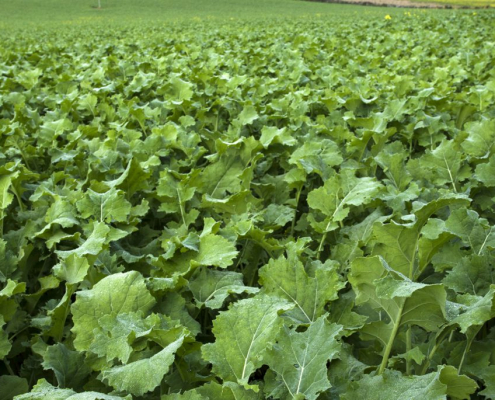


Relay cropping is when a cash crop is sown early in the growing season and within a month or so, a second crop is then seeded. This is conducted by taking advantage of the fact that the first crop planted has not grown tall enough to be ruined by machinery while placing the second crop into the ground. Possible benefits include the reduction of soil erosion from air and water after the end of the growing season and the maintenance of a living root system during the cold months of the year.
Annual Reports
We publish all our research results plus extension activities in our yearly annual report. Members and major funders receive Annual Reports each year.
Contact us if you would like a past Annual Report at extension@npara.ca
Browse by project type
Search projects
Companion cropping is the practice of growing a forage crop alongside a grain crop to optimize land-use efficiency so that a field can be used for hay or as a pasture after the main crop is harvested. Using small plots on a research farm in North Star, AB, this trial aims to determine which of three species of annual clover (White Clover, Crimson Clover, or Subterranean Clover) grown alongside a field crop (CWRS wheat or canola). The clovers are either sown by a disc drill or broadcast over the plot, therefore revealing which seeding method will yield better results for companion cropping.
Past studies in the Peace Region have demonstrated that higher seeding rates lead to significantly higher yield and test weights in CWRS wheat. However, crops grown at the highest seeding rates (37 seeds foot-2) also had significantly lower protein content. Thus, we wish to evaluate more commonly grown varieties grown in the Peace region such as AAC Viewfield and AAC Brandon.
While yield production of spring wheat is improved by intensified agricultural strategies and novel genetic varieties, optimal soil N release and precise N uptake by crops is still an ambiguous question. This experiment focuses on exploring N-enhanced efficiency fertilizers (EEF) set at different rates and banded at different development stages. The goal is to observe if a certain EEF can improve overall yield of CWRS wheat.
Demonstration of spring triticale varieties compared to commonly grown cereal crops:
Gunner
Flex 719
Hybrid Surge
Triple Crown Mix
Diverse Mix
Surge
CS Camden oats
CDC Austenson barley
The Peace Region Living Lab project is a region-wide collaboration led by the Peace Region Forage Seed Association (PRFSA). Seven other producer groups in Alberta and BC have joined the PRSFA to bring together a project that will serve agricultural producers and land stewards of the region. Enhancing agroecosystem services in the Peace River Region is the focus of the Peace Region Living Lab (PRLL), with the goal of adoption of practices that improve productivity, profitability and environmental resiliency.
Compare the growth and performance of CDC Austenson barley treated with Nutrient Plus through different methods:
Seed treatment
In-furrow application at seeding
Foliar application
Seed treatment + in-furrow
Seed treatment + in-furrow + foliar application
No Nutrient Plus treatment
Allelopathy is the chemical impact an individual plant has on other plants. Allelopathy can affect growth and yield of other plant species or secrete chemicals that prevent propagation and development of seedlings of the same species. Allelopathy can be used as a strategic alternative to chemical weed management. Residues of allelopathic cover crops not only provide benefits to the soil but also help to reduce weed populations during their growth and likely for the cash crops seeded in the season thereafter.
Comparing the effects of different microbial seed inoculants on canola (CS 2600 CR-T) crop productivity and soil health:
Ignite L
BioniQ
Control group (no seed treatment)
Demonstrations at the NPARA Research Farm in 2024:
Crops Garden
Regenerative Agriculture Lab
Alberta Native Bee Monitoring
East Restoration Project
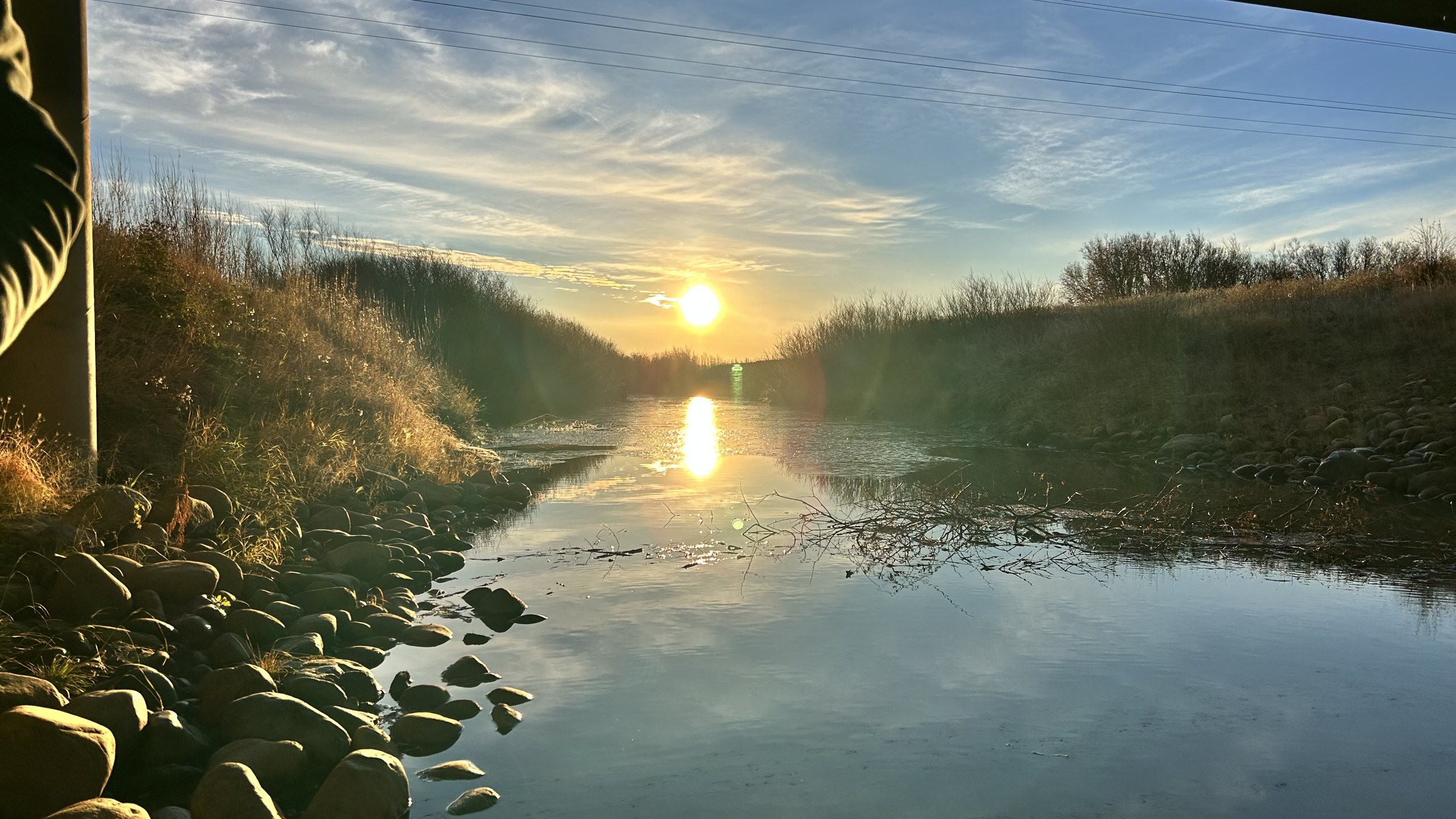
The County of Northern Lights (the County) and the North Peace Applied Research Association (NPARA) have maintained an ongoing water quality monitoring program in the Notikewin and Keg rivers since 2011. The study was designed and implemented by Aquality Environmental Consulting Ltd. The purpose of the study was to gather baseline water quality information for a complete suite of parameters, for future planning of land use and environmental management activities on the two rivers, and to determine water quality for use as a drinking and agricultural water source.
Regional variety trials provide locally-based insight into which crops are most capable of succeeding in the Peace region. During field tours, producers are offered the opportunity to observe on-site characteristics such as emergence, height, disease rates, and maturity. Harvest characteristics including yield, test weight, and protein content are compared in the fall.
These milling oat varieties were chosen for the 2024 trial by a survey completed by producers in the County of Northern Lights:
AC Morgan
AAC Douglas
CS Camden
CDC Arborg
Kalio
Kyron